





The UK’s real estate development landscape is steadily evolving in 2025, shaped by emerging technologies, sustainability expectations and growing demand for adaptive urban spaces. Developers, investors and policymakers are navigating a dynamic environment marked by shifting demographics, regulatory focus on ESG and regional growth incentives.
For those invested in real estate development in, UK, staying ahead means understanding the forces driving transformation, not just reacting to them.
Here are five key trends redefining the sector this year.
1. Sustainability and ESG Integration
Environmental, Social and Governance (ESG) considerations have moved from optional to essential in UK real estate development. The push towards net-zero carbon emissions by 2050 has accelerated the adoption of sustainable building practices. Developers are increasingly incorporating energy-efficient designs, renewable energy sources, green roofs, low-carbon construction methods and sustainable materials into their projects.
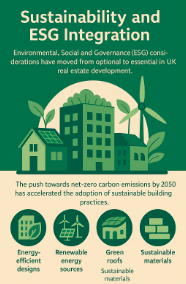
This shift not only aligns with evolving regulatory requirements but also meets the growing demand from investors, occupants and municipalities for environmentally responsible and future-ready properties.
2. Adaptive Reuse and Urban Regeneration
With a focus on maximising existing assets, adaptive reuse of buildings has gained momentum across the UK’s evolving urban landscape. Converting underutilised commercial spaces into residential units addresses housing shortages and revitalises urban areas in a cost-effective, resource-conscious way.
Projects like the transformation of office buildings into apartments in London, Manchester, and Birmingham exemplify this trend, offering sustainable solutions that preserve architectural heritage while meeting contemporary needs for flexible, community-focused living.
3. Technological Innovation and Smart Buildings
These innovations not only improve operational performance but also add long-term value for tenants, asset managers and investors seeking modern, connected spaces with measurable sustainability and cost-saving outcomes.
4. Focus on Affordable and Inclusive Housing
Technology is playing a pivotal role in modern real estate development. The integration of smart building systems enhances energy efficiency, security, air quality monitoring and occupant comfort. Developers are leveraging data analytics, Internet of Things (IoT) devices, predictive maintenance tools and advanced automation to create responsive, self-optimising environments.
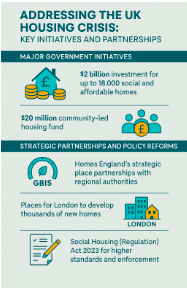
Addressing the UK’s housing crisis remains a priority in 2025. There is a concerted effort to increase the supply of affordable and inclusive housing options. Government initiatives and partnerships aim to deliver homes that cater to diverse income levels and community needs. Developments are emphasising mixed-use spaces that combine residential, commercial and recreational facilities to foster vibrant, inclusive communities.
5. Regional Growth and Infrastructure Development
Beyond London, regional cities like Manchester, Birmingham and Leeds are experiencing significant growth. Investments in infrastructure, such as transportation and digital connectivity, are attracting businesses and residents to these areas. Developers are capitalising on this trend by initiating projects that support economic diversification and urban expansion, contributing to balanced national development.
UK Real Estate Development
Sustainability, smart tech, urban reuse, inclusive housing and regional growth are redefining UK real estate development in 2025. Work with pro-active professionals to keep your portfolio ahead of the market.
Discuss real estate development UK trends with Swift Holding’s team of experts today.